



Integrated high-throughput polyolefin recycling solutions
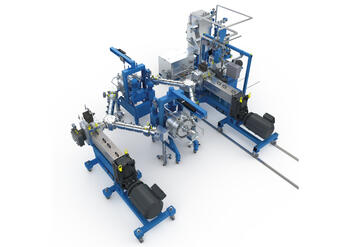
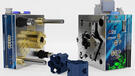
In response to the rapidly growing demand for high-capacity polyolefin recycling systems, Nordson BKG, part of Nordson Corporation’s Polymer Processing Systems division, and Fimic, have started a strategic collaboration to deliver fully integrated solutions capable of processing 4 to 6 tons per hour of post-consumer plastics, solutions which are at the heart of their participation in K 2025. The joint solutions address key industry challenges, including material variability, filtration limitations, and costly downtime. By integrating Nordson’s advanced gear pumps, valves, and underwater pelletizing systems with Fimic’s high-performance filtration units the systems ensure consistent pressure, superior filtration, and pellet homogeneity - even at high throughputs and high level of automation.
To meet the diverse and evolving demands of high-capacity polyolefin recycling, Nordson BKG and Fimic have engineered a modular system architecture offering exceptional operational flexibility. The solution is available in three distinct configurations - DO (Discontinuous Operation), CO (Continuous Operation), and CFO (Continuous Flexible Operation) - each tailored to specific production environments, throughput goals, and maintenance strategies. This versatility empowers recyclers to optimize performance, minimize downtime, and maintain consistent product quality across varying operational scenarios.
DO-Line (Discontinuous Operation) is cost-effective solution requiring a complete line shutdown during screen changes on the Fimic melt filter. CO-Line (Continuous Operation) features dual diverter valves that allow screen changes on one filter while the other remains in operation, maintaining up to 75% throughput during transitions. CFO-Line (Continuous Flexible Operation), the most advanced configuration, is equipped with two underwater pelletizers; this setup enables one line to remain fully operational while the other undergoes maintenance, ensuring uninterrupted production; smaller equipment reduces investment and spare part cost for gear pumps and underwater pelletizing systems.
The main features of the system are: seamless integration from twin-screw adaptor flange to underwater pelletizer; minimum throughput of 4 t/h with filtration precision down to 100-150 μm; intelligent pump control, modular system design, and minimal operator involvement to maximize performance and lower Total Cost of Ownership (TCO), meanwhile, the fully automated, intelligent venting process ensures consistent product quality – even during filter changes – by eliminating defects; innovative design, including the use of mobile components and thermal elongation adaptors, to maintain the system stable under high-temperature conditions for high-capacity lines.
Most read news