




The role of industrial design in turning plastics into competitive value for companies

In industrial manufacturing, plastics remain a key material – versatile, high-performing, and adaptable to a wide range of functions and markets. Yet their real value increasingly depends on how they are designed. The difference between an anonymous component and a competitive product often lies in the quality of its design, not merely in the material itself.
Industrial design plays a decisive role in this evolution. It sits at the intersection of engineering, aesthetics, and production, where every choice – from geometry and wall thicknesses to assembly logic and material selection – shapes performance, cost, and environmental impact.
A rigorous design approach can reduce material usage, optimise moulding cycles, and simplify maintenance, delivering measurable benefits for both companies and the environment.

As demonstrated by the experience of PQ Design Group, design is not only a creative activity but a technical and perceptive process that integrates multiple competencies and elevates manufacturing know-how.
Working alongside companies means interpreting real needs and constraints, and translating them into solutions that enhance functionality as well as the perceived quality of the final product.
Surfaces, textures, colours, and finishes become part of the industrial vocabulary—elements that influence user experience and communicate technical credibility, even in highly specialised sectors.
Through a multidisciplinary method, PQ Design merges research, design, and engineering to ensure coherence between form, function, and production, guiding ideas all the way to industrialisation.
This approach enables plastics to express their most advanced qualities: precision, durability, surface refinement, and production efficiency.
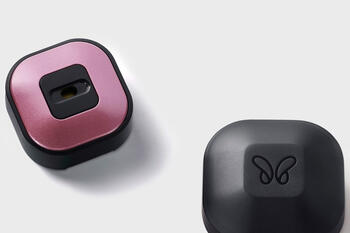
When thoughtfully designed, plastics remain a highly contemporary material. Their evolution depends not only on new formulations or biopolymers, but also on the ability to fully exploit their potential through conscious, well-informed design.
In this sense, design also plays a cultural role: promoting responsible and efficient material use while balancing innovation, function, and sustainability.
From concept development to prototyping and final industrialisation, design acts as a true bridge between an idea and its production, creating a shared language between industry and the market.
This is where the real value of a project emerges: in its ability to transform polymers into products, and products into lasting competitive advantage.


Notizie più lette