



Comerio Ercole launches Logos for low-temperature devulcanisation of ELT

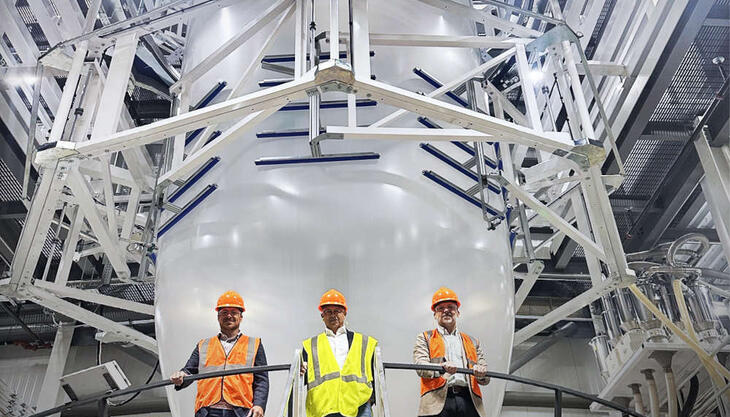
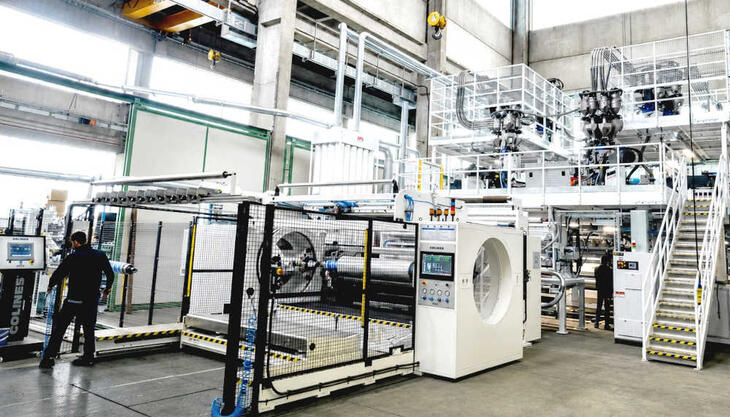
The manufacturer of plants and calenders for plastic and rubber processing, Comerio Ercole, in collaboration with Rubber Conversion, has patented the new Logos plant for industrial-scale devulcanisation of end-of-life tyres (ELTs) to obtain controlled, high-quality secondary raw material.
The system is based on a mechanochemical principle that applies controlled temperatures to selectively break sulphur cross-links using a highly selective chemical devulcanising agent, without affecting the main polymer chain. The low temperatures enable operation below conventional recovery thresholds, minimising polymer degradation whilst preserving the activity of fillers (carbon black and silica). The process operates continuously, which, unlike batch solutions, provides a stable and homogeneous flow of devulcanised material output, improving compounding consistency. The proprietary controlled atmosphere system also prevents oxidative degradation and minimises VOC emissions.
Logos is available in modular units with capacities of 400, 700 and 1,000 kg per hour, expandable in multi-line solutions. Optimised heating/cooling enables specific energy consumption (kWh/kg) 30% lower than conventional regeneration. Regarding automation and control, the system provides integration of PLC-Scada with complete IoT connectivity, algorithms for predictive maintenance and production traceability. The plant complies with ISO 50001 for energy management and can be inserted directly into circular economy production cycles. Each 1,000 kg per hour unit can recycle approximately 7,500 tonnes per year of ELTs, avoiding the release into the atmosphere of approximately 18,000 tonnes per year of CO2 equivalent compared to their incineration.
The system enables reduction of sulphur bonds by up to 80% and polymer degradation is less than 5%. The devulcanised material obtained can replace up to 50% and up to 25% of virgin rubber in compounds for the production of footwear and tyres respectively, preserving properties such as tensile strength and elongation.
Most read news