



Lightweight and Elastic Parts in Expanded Material: Presma’s Rotary Technology at Plast
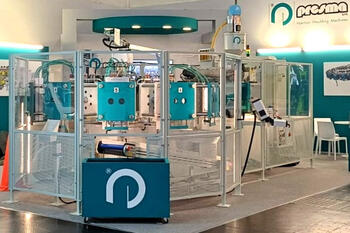
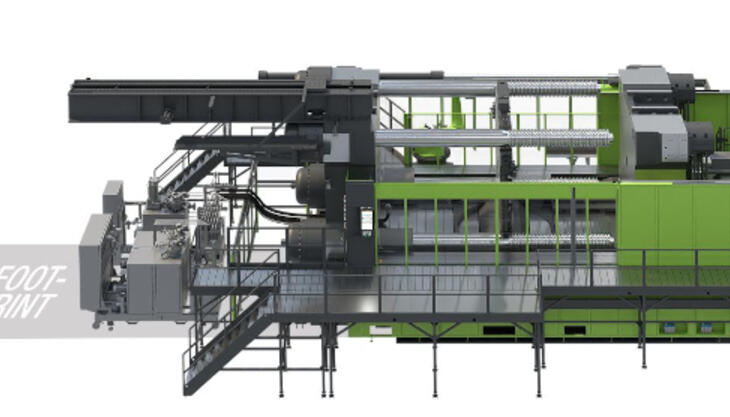
At Plast 2026, Presma will exhibit a multi-station press equipped with an In-Fill System for the introduction of physical blowing agents into the plasticizing unit. The company’s rotary injection presses are fitted with a special transfer injection unit and head for processing expanded materials, enabling the moulding of thick-walled items in virgin or recycled thermoplastics. Using this head combined with an Accumulator Piston, it is possible to process materials such as PVC, PP, crystal and high-impact PS, high and low-density PE, ABS, cellulose acetate, thermoplastic rubber, and blends of thermoplastics with natural rubber, all appropriately compounded with chemical blowing agents.
These multi-station presses allow the production of particularly lightweight (density up to 0.4) and elastic parts, also utilising recycled materials, as replacements for products traditionally made of wood, such as brush handles, brush and broom supports, furniture components etc., which, once painted, achieve a “wood-effect”. Presma’s rotary presses are also capable of processing materials that normally contain residues of chemical blowing agents or moisture, which are difficult to mould using traditional reciprocating screw and single-station machines. The items produced with such thermoplastics are usually thick-walled, generally exceeding 8-10 mm, and require a long residence time inside the mould to ensure optimal cooling.
Thanks to the particular transfer system, the material, mixed in two separate times and zones before flowing into the mould, is distributed within the cavity with homogeneous cellulation. This application can also be utilised on multi-station versions equipped with a co-injection unit, allowing injection through two separate channels and a single nozzle of a high-quality compact outer material and a lightweight, economical, expanded inner material, which can also be recycled. In some cases, the core can represent up to 60–65% of the total product weight. With this solution, during the normalisation phase (cooling), the expanded core tends to keep the part “inflated,” pushing the outer “skin” against the mould walls and compensating for the typical shrinkage of compact material during this phase.
Most read news