



A strategy for the bioeconomy of the European Union

The European Commission has adopted a new Strategic Framework for a Competitive and Sustainable EU Bioeconomy, setting a roadmap to build a cleaner, more competitive and resilient European economy. By using renewable biological resources from land and sea, and by offering alternatives to critical raw materials, the EU aims to accelerate the transition to a more circular, decarbonised economy while reducing dependence on fossil imports.
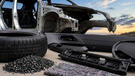
The bioeconomy already plays a major economic role: in 2023 it was worth up to €2.7 trillion and employed 17.1 million people, around 8% of all EU jobs. Every job in the bioeconomy generates three additional indirect jobs. Bio-based products are increasingly present in everyday life, from chemicals derived from algae for pharmaceuticals, cosmetics and industrial uses, to bio-based plastics for packaging and automotive parts, as well as construction materials, textile fibres and fertilisers. Despite this, large potential remains untapped.
The new Strategy is designed to unlock this potential by scaling up innovation and investment, developing lead markets for bio-based materials and technologies, ensuring a sustainable supply of biomass, and better exploiting global opportunities. To turn bio-based innovation into industrial reality, the Commission will work to simplify and align regulation, rewarding circular and sustainable business models while maintaining EU safety standards. Faster and clearer approval procedures will support especially SMEs. EU funding will be steered towards bio-based technologies, and a Bioeconomy Investment Deployment Group will be created to assemble a pipeline of viable projects, reduce risk and attract private capital.
The Strategy identifies priority markets with high economic and environmental potential, including bio-based plastics, fibres, textiles, chemicals, fertilisers, plant protection products, construction materials etc. A Bio-based Europe Alliance is envisaged, bringing together EU companies committed to collectively purchasing €10 billion of bio-based solutions by 2030.
Ensuring that biomass is used sustainably is a central pillar. Europe is largely self-sufficient in biomass, but long-term resilience depends on responsible sourcing and managing forests, soils, water and ecosystems within ecological limits. Greater circularity and higher-value uses of secondary biomass – such as agricultural residues, by-products and organic waste – will be promoted. The Commission also plans initiatives to reward farmers and foresters who protect soils, enhance carbon sinks and support sustainable biomass use.
Finally, the Strategy seeks to strengthen Europe’s global position. Building on its strong research base and innovative industrial fabric, the EU aims to become a world leader in sustainable bio-based technologies, materials and expertise, while diversifying partnerships and resources to reduce vulnerability in a fragile geopolitical context.
Most read news