



The first food-contact approved recycled polypropylene
The Prevented Ocean Plastic programme, designed to prevent plastic waste from getting into the oceans, has announced – together with leading industry partners – the launch of the first recycled polypropylene (rPP) approved for food contact under EU Regulation 2022/1616. This is a significant milestone: although PP is one of the most widely used polymers – found in cups, bottles, caps and flexible films – its global post-consumer recycling rate stands at just about 1%, making it the second most common plastic type leaking into the oceans.
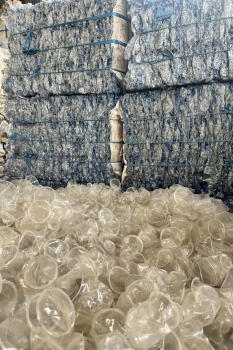
The project is the result of a global partnership involving Innovia Films (CCL Industries), Spectra Packaging, Bantam Materials UK, PETMan, together with Circulate Capital and the Prevented Ocean Plastic collection system in Indonesia, supported by Danone. The process employs Starlinger’s Viscotec technology and, for the first time, enables the production of fully circular, food-safe rPP. It is estimated that in its first year alone the initiative will prevent 500 million PP cups from entering the oceans – enough plastic to circle the Earth 1.25 times.
The achievement marks a decisive step forward for a material traditionally regarded as difficult and costly to recycle at scale. Until now, PP has largely been subject to downcycling, with conversion into lower-quality products, or, when not properly managed at end-of-life, has been at risk of leaking into the environment. The Prevented Ocean Plastic approach instead demonstrates that even complex materials can be recovered and valorised, thanks to a controlled supply chain that intercepts waste before it reaches oceans and waterways.
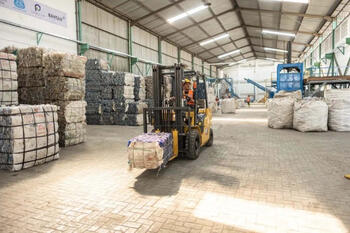
The organisational model adopted is that of franchising, already successfully tested in Indonesia and supported by Danone Aqua. Scalable and replicable across at-risk coastal communities, the system turns discarded plastic into a valuable resource, ensuring traceability and quality in collection and recycling operations.
Once collected, sorted and washed, PP waste is processed by PETMan using Viscotec technology, converted into high-quality, food-safe rPP, and then supplied by Bantam Materials UK to end-users. Early adopters include Innovia, which will produce BOPP flexible films, and Spectra, which will manufacture bottles and caps through injection moulding and blow moulding. Further applications include trays for fresh fruit, vegetables and proteins. Each batch is subjected to independent scientific testing in line with industry standards.
“This world-first is a monumental moment for ocean plastic prevention and demonstrates how the Prevented Ocean Plastic model can address large-scale collection challenges,” said Raffi Schieir, founder of the programme.
Most read news