




From Offshoring to Reshoring: What’s Changing
The Value of Proximity in Plastic Manufacturing
For many years, offshoring was regarded as a strategic lever for reducing production costs. Today, however, events such as the pandemic, trade tariffs, geopolitical tensions, and rising energy costs have demonstrated that no geography is inherently risk-free, and that cost competitiveness alone is no longer sufficient.
As a result, reshoring and nearshoring have become increasingly prominent themes within the manufacturing industry.
But is reshoring truly the definitive solution?
Relocating production or changing suppliers – even within geographically closer regions – is often a lengthy and complex process, requiring audits, the implementation of new quality control systems, and the establishment of entirely new industrial relationships.
Today, the real question is no longer where production takes place. It is who you choose to produce with.
The Plax Group Model
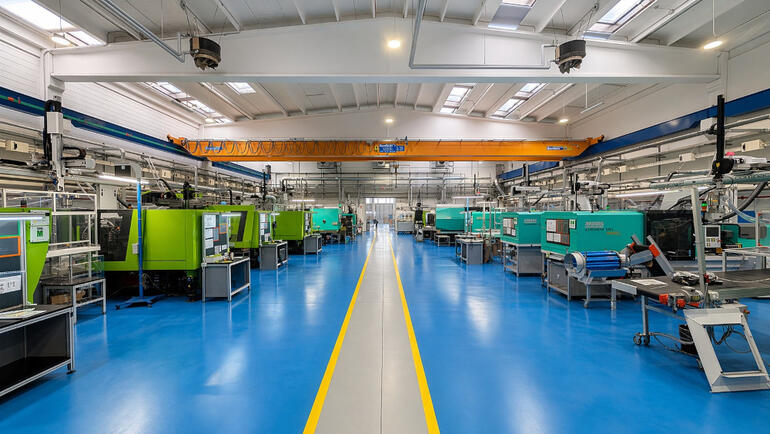
At Plax Group, we have developed an industrial model designed to meet today’s evolving new market dynamics, moving beyond the traditional concepts of offshoring, nearshoring, and reshoring.
All our plastic injection molding facilities operate according to:
- Shared production standards
- Identical certifications
- Uniform and controlled processes
- A single point of contact for the customer
This integrated approach enables us to guarantee consistent production quality worldwide, regardless of manufacturing location.
Global Flexibility, Centralized Management
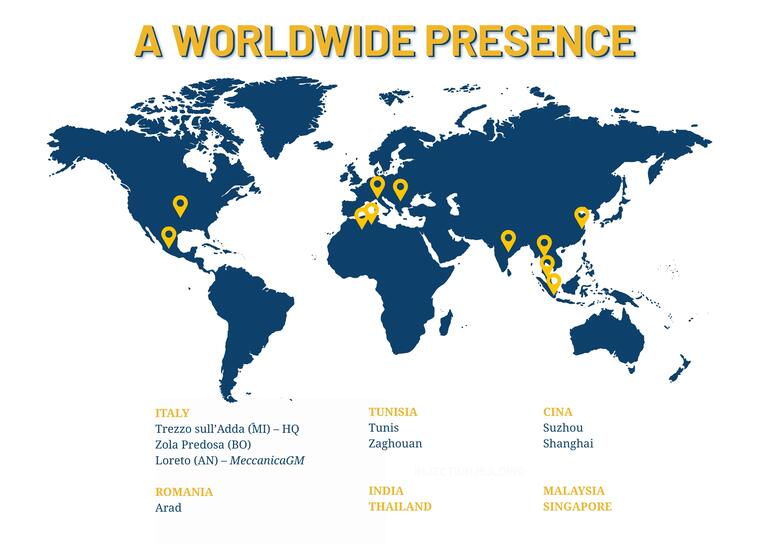
Thanks to our international footprint, we provide tailor-made manufacturing solutions through our production facilities in Italy, Romania, Tunisia, and China, supported by strategic hubs in Mexico and the United States.
By combining global flexibility with centralized management, Plax Group ensures efficiency, reliability, and seamless coordination across every project.
Our strategic production network includes:
- Proximity to the market (Nearshoring & Reshoring): facilities in Italy and Romania
- Competitive nearshoring: Tunisia, offering the ideal balance between cost efficiency and proximity to Europe
- Cost optimization: manufacturing facilities in China
This approach enables us to adapt production according to customer’s requirements without the need to change industrial partners.
When market conditions evolve, we can rebalance production across different sites while maintaining the same quality standards, the same processes and the same dedicated point of contact.
An Integrated and Secure Supply Chain
In the plastics industry, raw material management is a critical factor. The availability and quality of polymers directly impact production continuity and operational reliability.
To address these challeges, Plax Group has developed an international supply chain designed to:
- Source materials from the most advantageous global markets
- Ensure continuity of supply
- Identify alternative materials when critical issues arise
This approach reduces operational risk, strengthens production resilience, and makes nearshoring strategies even more effective and sustainable over time.
Beyond Reshoring and Offshoring: A New Balance
Today, proximity between production and customer remains a strategic advantage — but it must be supported by flexibility, control, and adaptability.
Nearshoring represents a middle-ground solution, balancing geographical proximity with industrial competitiveness. The real value, however, comes from integrating reshoring, nearshoring, and global manufacturing into a single, coordinated industrial model.
Plax Group positions itself as a strategic industrial partner capable of supporting companies through this increasingly complex environment by offering:
- Technical expertise in plastic materials
- International manufacturing capabilities
- Integrated supply chain management
Because today, it’s no longer simply deciding where to produce. It’s about building a manufacturing model that is resilient, flexible, efficient, and ready for the future.

Most read news