



3D-printed coffee table in bio-based polyamide
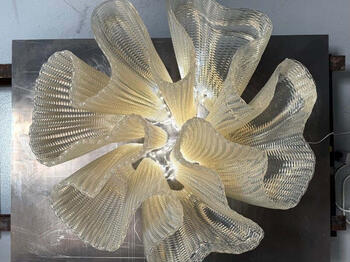
The base of the Nomura coffee table – a name inspired by the form and fluid movement of the giant jellyfish found in Japanese waters – is produced by the French start-up Poolp using 3D printing of Arkema’s transparent Rilsan polyamide.
The table combines biomimetic design with a high level of technological sophistication. At the core of the concept is the use of Rilsan Clear transparent polyamide, a material that is more than 60% bio-based and derived from castor oil. Its excellent mechanical, chemical and wear resistance, together with outstanding durability in demanding environments (such as automotive, aerospace and premium consumer goods), make it a material of real significance which, thanks to this joint project, is now also being explored as an ideal solution for high-end design and furniture applications.
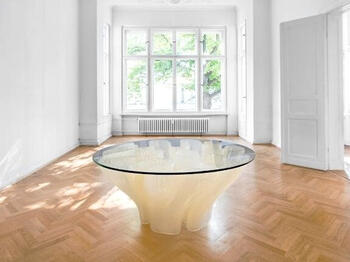
This piece of furniture is the result of advanced 3D modelling techniques, generative algorithms, pellet-extrusion additive manufacturing and a close interaction between materials engineering and aesthetic–functional design. Poolp employs a robotic large-format 3D printing process, commonly referred to as Large Format Additive Manufacturing (LFAM), which prints directly from pellets. This approach enables rapid execution, a significant reduction in waste and the ability to produce complex, large-scale geometries.
Developed and manufactured in France, this one-of-a-kind piece exemplifies the collaboration between industrial expertise and algorithmic design, and illustrates the emergence of a new sustainable, circular and on-demand production model made possible by additive manufacturing and advanced specialty materials.
Most read news