



Plastics Europe confirms the difficulties facing the European plastics industry

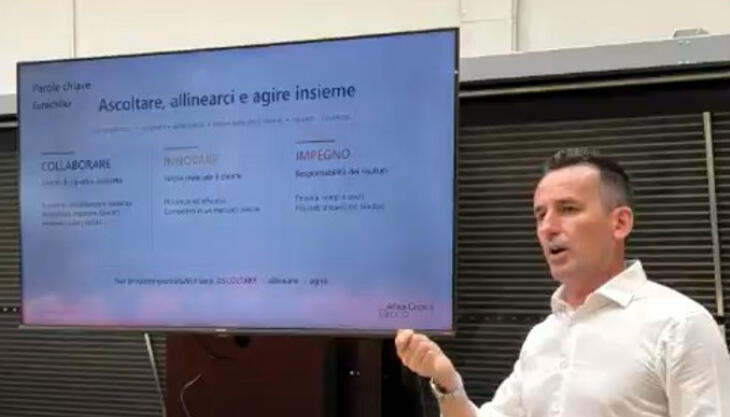
(Picture Linkedin/Benny Mermans)
On the opening day of K 2025, Plastics Europe unveiled the report Plastics the Fast Facts 2025, which confirms the adverse economic conditions affecting the European plastics industry and its rapid decline in competitiveness. Despite a modest stabilisation in production volumes in 2024 (+0.4% to 54.6 million tonnes) after a record contraction in 2023 (-7.6%), Europe’s global market share has continued to erode – collapsing from 22% in 2006 to just 12% in 2024. Industry turnover has also fallen sharply, from 457 billion euros in 2022 to 398 billion euros in 2024 (-13%). Europe’s decline contrasts starkly with the industrial boom taking place in other regions. Global plastics production increased 4.1% last year and by 16.3% since 2018. Asia now produces 57.2% of the world’s plastics, with China alone accounting for 34.5% (nearly three times more than the entire EU).
“Europe’s plastics industry stands at a pivotal moment. While innovation and investments accelerate on other continents, Europe faces softened turnover and slowed production. Our region needs urgent political support and frameworks to reinvigorate investment and secure resilient and competitive supply chains. Europe must act now. Swift, decisive action is critical to secure the future of local plastics production and protect the strategic sectors relying on Europe’s plastics industry”, Benny Mermans, President of Plastics Europe, said.
Europe’s plastics manufacturers face crippling energy costs, climate-related taxes and high feedstock prices, which are eroding the industry’s competitiveness and accelerating ongoing asset sales and closures. The EU27 negative trade balance in plastic polymers has improved marginally from -0.8 million tonnes in 2023 to -0.2 million tonnes in 2024, supported by a 10% increase in exports. However, changing global tariff regimes continue to pose a very significant threat. The United States is the largest source of polymer imports into Europe, accounting for 18.9% of the market, and the fourth largest export market for EU polymers, accounting for 7.7% of the market.

“Plastics are and will remain an essential material that underpins European industrial resilience, innovation and competitiveness. Keeping a sufficient level of local production avoids excessive dependence and strengthens Europe’s security. The European plastics industry is at a cliff edge as competitiveness collapses. The alarm bells should be ringing in the European Commission and EU capitals. Our political leadership must decide whether Europe wants to develop the world’s first circular1 plastics system or decarbonise through further deindustrialisation. The Clean Industrial Deal cannot be implemented fast enough”, Virginia Janssens, Managing Director of Plastics Europe, added.
Plastics Europe calls for urgent EU and national policy action. These must address Europe’s energy cost crisis, strengthen the enforcement of EU legislation at its borders, and promote investment in circular plastics production in Europe. We must foster strong market demand for circular plastics through ambitious recycled-content targets and other incentives. Additionally, establishing a Chemicals and Plastics Trade Observatory to monitor trade flows in real time will help ensure a level playing field, enabling EU industry and officials to respond promptly with trade defence measures when necessary. Europe’s past leadership in circular plastics is now being eclipsed by China and the rest of Asia. While circular plastics accounted for 15.4% of EU production in 2024, this figure reflects a sharp 18.9% decline in fossil-based production since 2018, rather than a significant expansion in circular production.
In 2024, total EU circular plastics production remained flat at 8.4 million tonnes. Mechanical recycling increased by just +2.7% to 7.7 million tonnes, while chemical recycling remained static at 0.11 million tonnes, and bio-based plastics declined by 25% to 0.6 million tonnes (due to the constraint of subsidised feedstock competition from biofuels). By contrast, global circular plastics production surged to 43.9 million tonnes in 2024, breaching the 10% threshold of total global output for the first time. China alone produced 13.4 million tonnes of circular plastics in 2024, nearly double Europe’s volume.
“Our decarbonisation and circular transition is stalling in the absence of clear policy support. All available recycling technologies, along with timely and effective market-pull measures, are essential for creating the necessary scale for a competitive Europe. Our Plastics Transition roadmap shows how a net-zero emissions, circular plastics system in Europe can be achieved. However, only a competitive European plastics sector today will unlock the market drivers and investments required for our much-needed circular economy of tomorrow”, Virginia Janssens commented further.

Most read news