



Competitiveness and autonomy: EU accelerates on market, investment and energy at Alden Biesen
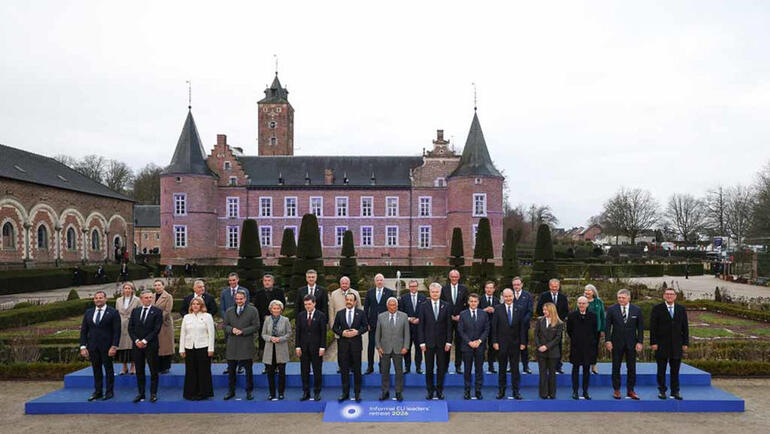
An informal meeting between EU leaders took place on 12 February at Alden Biesen in Belgium to examine the economic situation and adopt measures aimed at improving competitiveness within the Union and reducing economic dependencies on non-European sources. A shared priority was identified in strengthening economic growth in Europe, essential for prosperity, creating quality jobs and supporting the European Union's economic and social model.
To strengthen the EU's competitiveness and strategic autonomy, a series of priority intervention areas were identified; the discussion will be resumed at the next European Council in March, during which the Commission is also expected to present a roadmap on "One Europe, One Market". Unanimous agreement was also expressed on continuing the Union's ambitious simplification programme.
The single market was identified as a winning card which, with approximately 450 million consumers, represents one of Europe's main economic levers. The need was emphasised to move from a single market that is still incomplete to what has been dubbed "one single market for one Europe", acting immediately to achieve results by 2026 or, at the latest, by 2027. There was also unity of views on the importance of proceeding towards the "28th regime", thus enabling European companies to operate beyond national borders within a single corpus of corporate rules.
It was noted how Europe lacks investment, without which there can be no competitiveness. To achieve higher levels of investment and innovation, it is necessary to allow a certain degree of corporate consolidation in some strategic sectors (for example telecommunications), whilst ensuring accessibility and security of services for citizens and businesses.
Among the topics discussed were also ways to mobilise private investment: in this context, work on the savings and investment Union must be accelerated. Regarding public investment, the role of European instruments will need to be discussed, including in the context of negotiations for the next multiannual financial framework, the EU's long-term budget.
On energy, to enable Europe to achieve strategic autonomy and reduce prices, the best long-term strategy was identified in the energy transition. With reference to electricity prices, pragmatic solutions are needed that take into account the specific challenges of Member States and certain industrial sectors. In close contact with the European Commission, concrete measures will be examined at the March European Council meeting.
There was also agreement on the strategic importance of protecting and strengthening certain sectors in Europe, such as defence, space, clean technologies, quantum technologies, artificial intelligence and payment systems. Broad consensus was expressed on the use of "European preference" in selected sectors, in a proportionate and targeted manner, following thorough analysis aimed at identifying where it is necessary and useful.
In conclusion, unanimity was reached on the fact that Europe is open to trade and that an ambitious and pragmatic trade policy, focused on diversification, is in Europe's collective interest. Leaders will continue to support the work carried out by the European Commission on trade policy.

Most read news