



Rehau: ten years of Sustainability Report
International group active in polymer processing, Rehau Industries has published its tenth Sustainability Report, which illustrates the results achieved by the company in 2024 and its future objectives. This strategy of long-term activity for environmental protection is consolidated in the constant development of solutions capable of offering a competitive advantage over future regulations and standards.
Among the most significant data emerging from the report, drafted according to criteria that anticipate the CSRD (Corporate Sustainability Reporting Directive), the continuous optimisation of processes aimed at material reuse stands out. This commitment has led to achieving a share of 18% recycled material for the production of new products, with the objective of reaching 20% by the end of 2025. Furthermore, the group has reduced Scope 1 and Scope 2 emissions by 58% compared to 2018: a significant figure, largely derived from investments in a wind energy PPA project, thanks to which today 68% of Rehau Industries' electricity requirement is covered by renewable energy sources.
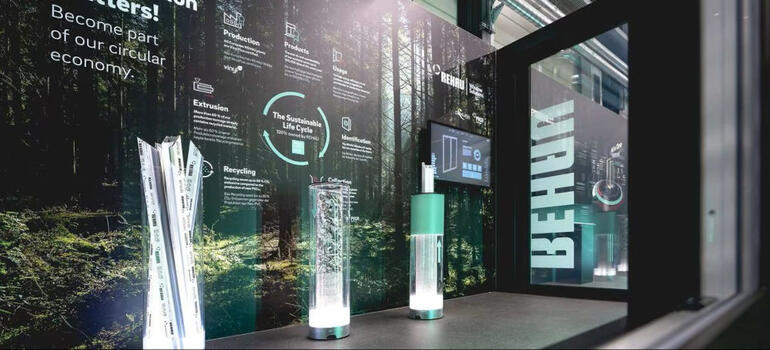
Rehau Window Solutions confirms itself as the group's leading division in terms of sustainability: with over 70,000 tonnes of regenerated used PVC every year and more than 60% of total production volume in recycled material, it proves to be a pioneer of closed-loop circular economy in the window and door sector with a unique approach to reuse that allows CO2 emissions to be reduced by 88% compared to virgin PVC production.
Aligned with the objective of achieving Net Zero by 2040, Rehau Building Solutions, Rehau Interior Solutions and Rehau Industrial Solutions are also committed to implementing climate and sustainable strategies that aim to reduce emissions relating to all Scopes, increasing the share of renewable sources used to cover energy requirements and integrating an ever-greater quantity of recycled materials into their polymer solutions.
Whilst Rehau Building Solutions pursues a holistic approach to sustainability, basing new product development on circular design and increasing the percentage of recycled materials – obtaining important certifications such as ISCC Plus, environmental product declarations (EPD) and sustainable building attestations – on the other hand, Rehau Interior Solutions is positioning itself as a pioneer in the development of virtuous solutions and innovative digital services. Both divisions have recognised and embraced the value of recovery, integrating it as a central part of their respective strategies through take-back programmes aimed at putting unused, post-industrial and post-consumer materials back into circulation.
Finally, the report reveals how innovation is the engine that drives the group's circular economy strategy, offering partners and customers new business models for lasting and sustainable success and concrete and reliable solutions to face future challenges, such as the Green Deal and EU taxonomy regulations.
Most read news