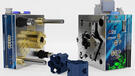




Plastic Systems presents the new DWH series of compact rotor dryers
Plastic Systems, a company of the Pegaso Industries group specialized in the design of systems for plastic material treatment, continues its path of technological innovation by expanding its range of industrial dehumidification solutions. During Chinaplas 2026, one of the most important international events for the plastics industry, the group officially introduced the new DWH series of compact honeycomb rotor dryers, developed to ensure high energy efficiency, process stability, and maximum operational reliability even in the most demanding applications.

The new range includes four models — DWH25, DWH50, DWH80, and DWH120 — with airflow capacities ranging from 25 to 120 m3/h, designed to meet the needs of processors requiring compact yet highly efficient systems for handling hygroscopic polymers.
At the core of the new series is the honeycomb rotor system, a technology capable of delivering constant Dew Point performance down to -40°C while maintaining extremely stable dehumidification conditions even in environments with high ambient humidity. Unlike traditional twin-tower systems, the rotor dryer eliminates the fluctuations typical of alternating cycles, ensuring a continuous and uniform airflow. This results in greater process repeatability and more accurate control of residual moisture in the pellets.
Dew Point stability represents one of the key strengths of the new DWH series. Maintaining constant values helps prevent production issues such as microbubbles, surface defects, or optical alterations in the final product, which are particularly critical when processing engineering polymers. The continuity of the dehumidification process also ensures consistently high performance regardless of external climate variations.
From a design perspective, Plastic Systems developed the DWH series with particular attention to mechanical robustness and simplification of the internal architecture. The rotor assembly is fully pre-assembled and bench-tested before installation, significantly reducing assembly and maintenance times while increasing the overall reliability of the system.
The vertical configuration of the rotor assembly contributes to improved mass distribution and reduced vibrations during operation. At the same time, the process airflow becomes more linear and uniform, delivering direct benefits in terms of thermal stability and dehumidification efficiency.
Particular attention was also dedicated to energy efficiency. Honeycomb rotor technology enables regeneration at lower temperatures compared to traditional twin-tower systems, allowing energy consumption reductions of up to 40%. In addition, the absence of alternating operating cycles makes energy usage more continuous and efficient, contributing to the stability of the entire production process.
The sealing system was also specifically designed to optimize overall system performance, resulting in improved energy efficiency and greater operational continuity.
The new DWH series also introduces several solutions aimed at reducing vibrations and mechanical maintenance requirements. This configuration improves the fluid-dynamic efficiency of the system while helping reduce overall noise and vibration levels.
From a construction standpoint, the external frame is made of AISI 304 stainless steel, ensuring high corrosion resistance, greater structural durability, and improved resistance in environments characterized by high humidity or the presence of dust. The surface is also easier to clean and sanitize, an especially important aspect in certain industrial applications.
Accessibility to electrical components has also been improved thanks to a dedicated electrical cabinet compartment with increased internal volume. This configuration simplifies wiring and maintenance activities while promoting better thermal dissipation for the installed devices.
One of the main advantages of the DWH series is the compactness of its architecture. The monoblock structure of the desiccant rotor significantly reduces the machine footprint compared to traditional twin-tower dryers, facilitating integration even into existing plants or production areas with limited space. The simplified layout, characterized by a lower number of components, also makes installation and operational management easier.
Maintenance requirements are considerably reduced thanks to the absence of molecular sieves to replace and switching valves typically found in conventional systems. This approach minimizes periodic maintenance interventions, reduces downtime, and ensures greater predictability of operating costs over the long term.
With the new DWH series, Plastic Systems further expands its technological offering in the field of industrial dehumidification, introducing a compact and efficient solution designed to guarantee production continuity, material quality, and reduced energy consumption. A technological evolution that confirms the group’s commitment to developing increasingly high-performance, reliable systems tailored to the needs of modern plastics processing.
The new DWH series will also be showcased at PLAST 2026, scheduled from June 9 to 12 at Fiera Milano Rho. The event will provide an opportunity to explore firsthand the technical features and engineering solutions developed by Plastic Systems for the new generation of compact honeycomb rotor dryers. The Pegaso Industries team will welcome visitors and industry professionals at Hall 24, Stand B55, where the entire DWH range and the latest innovations dedicated to plastic material treatment will be on display.

Most read news